Speaker A [00:00:01]:
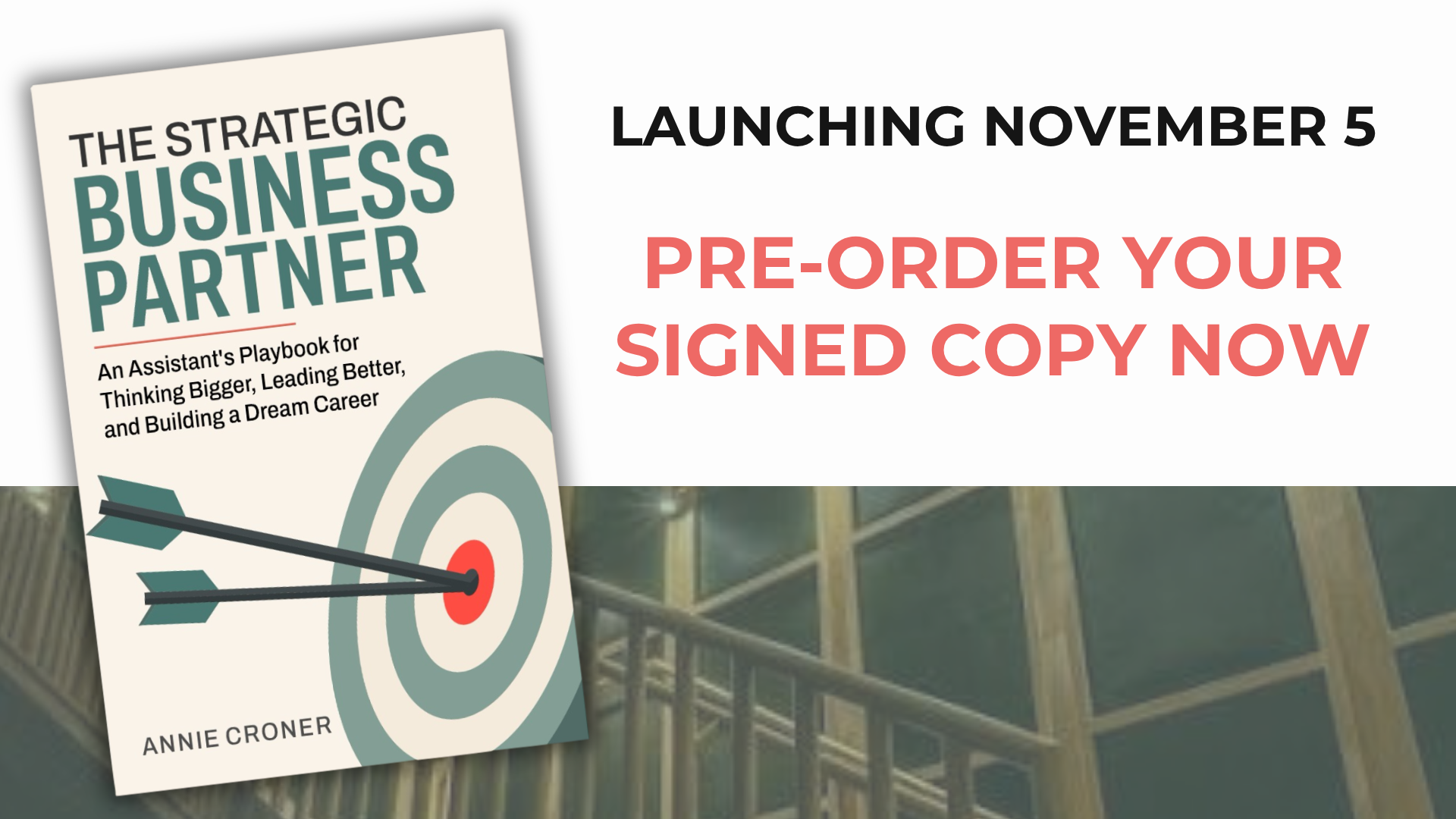
Welcome to the Whole Assistant Podcast, where assistants come to embrace their badassery and discover how to show up more strategically for their careers, their executives, and most importantly, themselves. I'm your coach, Annie Kroner. Join us as we dive into the skills, strategies, and mindset that will help you unleash your full potential. Let's go. Welcome back to the Whole Assistant Podcast. Today we are talking all about How not to gaslight yourself. But before we get started into that, you guys, we are less than a week away from my book launch, The Strategic Business Partner, which launches on November 5th. I am really excited about this.
Speaker A [00:00:43]:
If you'd like to preorder your signed copy, there's only one week left to do that. You can go to wholeassistant.com/book-bundles. I will also link to it in the show notes below. And then if you are local to Denver, please join us on November 5th at the Clayton Club in Cherry Creek. For the in-person launch party, which is gonna be from 5 to 8. And it is those hours because I wanted you to feel like you could come straight from the office. And if you want to dress up, please do. It is business attire or cocktail attire if you're feeling fancy.
Speaker A [00:01:13]:
If you want an excuse to get all dolled up, this is it. And you can go to wholeassistant.com/rsvp to RSVP for that party. It is 100% free. I would love to have you there. I will be selling and signing copies. I've got some great things planned for this event. It is going to be so much fun. There is also the link below where you can RSVP.
Speaker A [00:01:35]:
Okay, onto today's topic, which I do cover in the book as well, but not quite as much in depth as I'm planning on talking about today. So today I'm gonna be sharing how not to gaslight yourself. Now, this is a really interesting thing, and I've noticed it as a coach, and I think that we do this for a variety of reasons. But what is gaslighting yourself? And gaslighting yourself in the context I'm talking about it today is talking yourself into staying in a terrible situation. And we do this by telling ourselves that it's not that bad, or we should be able to handle it. I'm using air quotes around should. We should be able to handle it. And we think that things should be different, or maybe we're like hopeful that things will change.
Speaker A [00:02:20]:
So we end up talking ourselves into staying in a terrible, awful situation. And I call this gaslighting yourself because we aren't actually looking at the facts of the situation. We aren't actually looking at what is actually going on because we so desperately want to make our situation work. And there are several reasons why this happens. As I was preparing for this episode, more and more kept coming to me. So I'm just going to share all of these with you in the hopes that this will resonate with those of you who are dealing with this currently. So one reason that we stay is because we are people pleasers. And I define people pleasing as making others happy at our own expense.
Speaker A [00:03:02]:
We don't care about us, we just want to make everyone else around us happy. And in doing so, we think that that will fill us up and make us happy as well. And there is some truth to being service-oriented and finding fulfillment in that. And then there's a dark side, which is people-pleasing, which is doing that at our own expense. If you are not feeling fulfilled, if you're not feeling lit up by the work that you do, if you're not feeling joy on a daily basis or on a regular basis, that is something to look into. And if you feel any sort of resentment, that is a good guidepost for you. So it's probably an indicator that you are people-pleasing, that you aren't using your voice, to its full capacity. So if you're experiencing that resentment, just look inward and ask yourself, hey, what do I need to say? How have I not stepped fully into the fullness of who I am? How have I shrunk to fit a situation? And people pleasing is often one of the reasons why we try and gaslight ourselves or manipulate ourselves into staying in a position that isn't a really good fit for us.
Speaker A [00:04:06]:
Another reason is that we feel like we have to prove something to someone. And we feel like everyone around us may be thriving in an environment, but we are not. And so we just feel this need to prove it to ourselves, maybe to prove it to our partners, maybe to prove it to our executives that we've got it. When in reality, this should never be about proving anything to anyone. We should be looking at our values and assessing what is gonna be sustainable for us now and well into the future. Another reason that we tend to gaslight ourselves is wishful thinking that things will get better. Or perhaps our executives are also a part of the gaslighting process. Perhaps they're telling us that they're going to give us a promotion, or perhaps they're dangling something else in front of us, and that never actually comes to fruition.
Speaker A [00:04:50]:
And it's this awful, awful cycle. And what ends up happening is they're gaslighting us, and then we convince ourselves too— we play into that— and we convince ourselves too that, oh well, of course this will be different in the future, even though they Things have been this way for a year or two, and there's been really no hard evidence that anything is going to change. So I think it's really a good idea that we just go into things wide open. And I may do an episode later on about how not to be gaslit by others, but I, for the sake of this episode, I'm going to primarily focus on how not to gaslight ourselves, because this is something that happens, I think, too. I tend to be very optimistic and I tend to be like, oh, it'll work out. I'm sure they're on their growth journey and I'm sure it'll work out and everything will be good. So I'm just gonna stay. And I have stayed in a few situations that I should not have stayed as long in.
Speaker A [00:05:41]:
So really pay attention to alignment, really pay attention to that still small voice to help you determine whether or not this is a situation that is gonna be sustainable for you. Also look at your patterns, look at the past, like, Sometimes where we go, there we are. So sometimes we are on this habitual cycle and regardless of the role we're in, we're convincing ourselves of things we aren't actually growing because of like the habits that we have. So look at your habits as well. And there again, I would never recommend that you stay in a terrible situation regardless of what's going on for you. But if you notice a pattern in your life or in your work life or in any particular area, that's something worth examining and maybe even unraveling or unpacking with a coach or even a therapist. Therapists are really skilled in helping you see patterns, and that's why I have a therapist. Also, your therapist can look back at your childhood, and they are much more skilled at doing that.
Speaker A [00:06:41]:
They are trained to do that, whereas a coach is meant to help you determine where to go from here. A therapist will help you unravel your past a bit better, a bit more effectively, because that is what they are trained to do. Another reason why We can gaslight ourselves is we're just avoiding having a difficult conversation. And we'd rather mind a ninja our way into not having that conversation and to try and convince ourselves that we are happy or fulfilled in our role. Perhaps that having a difficult conversation won't help, and this is just a smaller thing than it actually is. And so that is another reason why this tends to happen. I think also a lot of us think that it will take too much energy to find a new job. And we're already experiencing burnout.
Speaker A [00:07:25]:
So how do we leave that role when we're already experiencing burnout? It's just easier to gaslight ourselves into staying in that position when it's really not gonna serve you. It's really not gonna help you. And then also, I just noticed this trend as well. I've coached several people who are nearing retirement and nearing the end of their career, and they're like maybe 3 to 5 years out from retirement. And they are unfulfilled in their roles. They don't like what they're doing. They don't like their executive. They don't like their environment.
Speaker A [00:07:54]:
And instead of going and finding a new job, they try and gaslight themselves into staying in their current role, but they begin to experience physical symptoms because of the misalignment. They begin to experience flare-ups and different things like that. So just pay attention to your body as well, because your body will tell you when it's time to leave, and it will also give you indicators. And just also know, yes, all the isms are real for sure. Ageism is real. Sexism is real. Fatphobia, transphobia, homophobia, all the phobias, all the isms, they are very real. But that doesn't mean that you can't find meaningful work for the last however long in your career.
Speaker A [00:08:35]:
'Cause I believe that you totally, totally can. And I've walked many clients through this process of finding a job, changing roles, Nearing retirement. So I am a firm believer that you can have a fulfilling career regardless of the stage of career that you're in, regardless of the stage of life that you're in. It really comes back to fit, and gaslighting yourself into staying in a role that isn't going to serve and support you is not how we find that fit. And last but not least, a lot of us stay in terrible situations out of fear. We don't want to upset our executive, or we may not want to upset our partner. Maybe we are getting paid really, really well, and we don't think that we can find another job that will pay as well, that will help us grow and thrive. And oftentimes we also convince ourselves that the devil you know is better than the one you don't.
Speaker A [00:09:29]:
We convince ourselves that it may be worse at the next role, and then we stay stuck in our current position, even though we know It's unsustainable, or it's just not for us anymore based on our current value set. And then I think also just coming back to yourself in a really powerful way will help us all not be gaslit. So that's kind of what I'm gonna go into now is how to not gaslight yourself. First of all, we wanna get crystal clear on our current values. Really getting clear on what you currently value will help you determine whether or not your role will be sustainable now and well into the future. And oftentimes our values shift and change with time and circumstance. Back when I was footloose and fancy-free and I didn't have any babies, it didn't bother me to work 24 hours a day. It really truly didn't.
Speaker A [00:10:17]:
And I didn't feel burnt out by it. I was working with really respectful executives. Occasionally they'd need something after hours and I didn't mind hopping on that. But then when I had my boys, That was just a no. That was just a big misalignment for me because I wanted to be present with them in the evenings. And there's nothing wrong with that. And I think that we sacrifice so much for our career sometimes without realizing, recognizing that we are whole humans and that we actually need to pay attention to our bodies, to our lives, to our values and what they currently are. So actually ask yourself if your values in your current role have shifted? Are you valuing something now that you didn't value previously? And it is okay to admit that.
Speaker A [00:11:02]:
Nothing has gone wrong. It's actually natural and normal in different phases of life for your values to shift a little bit. So that's the first thing on how not to gaslight yourself. Get really clear on what you're currently valuing. Also get really clear on what you truly want. And thought work should always be based on what you truly want. And I'll have clients come to me and they'll be like, Annie, Help me stay in my role. I don't wanna leave my role.
Speaker A [00:11:26]:
And I'll be like, why don't you wanna leave your role? And they're like, 'cause, and it's always something fear-based. Typically they desperately, I can see underneath, have this desire to move on from their role, but they're so afraid of what will happen, or they're so afraid of finding something even worse or landing in an even worse role that they try and mind ninja their way into staying. And thought work should always be based on what you truly, truly want. So really get clear on what you truly want. And here's a great question that we can all ask ourselves in order to figure that out. If you could wave a magic wand, what environment would you be in? What type of executive would you be supporting? What would you do with your life? What would you do with your energy? And for some of us, that means we, we would stay in our roles and we would try and grow in our roles, or we would try and gain a promotion. But for some of us, it means leaving the industry entirely. I've coached executive assistants out of their roles.
Speaker A [00:12:24]:
And that is a very beautiful thing. And I don't think that our careers have to look any one way. I don't think there has to be any one path to success. I don't think that chief of staff is any better than executive assistant. I don't think that executive assistant is any better than a receptionist. It is all about you, your values and alignment, and what brings you joy and what brings you fulfillment. And so really there again, The question I'd have you ask is, if you could wave a magic wand, what would your life look like? And that answer will give you clues to the next steps. Even if you can't leave your current position, or even if you can't leave an assistant role right now, maybe you need another qualification in order to do what you actually want to be doing, you can begin to take baby steps towards that.
Speaker A [00:13:11]:
And I will tell you guys, baby steps towards What you truly want will compound over time, and it's not going to take as long as you think to actually get there. So really getting clear on what you actually want. And then also, I always require that my clients know and like their reasons why they make any decisions that they make. And I will ask that of you too. Know and like the reason why you make any decision you make. Actually have a deep, solid understanding of why you're staying in your role. If you're staying in your role because you, it's a good paycheck and you just need the money right now and your family just needs the money right now and you like that reason, great, go with that. If you feel called underneath that though to something bigger, maybe set a time parameter around that.
Speaker A [00:13:57]:
Maybe say, I'm going to stay in this role for 3 years and then I'm going to look elsewhere to do something else that will be more fulfilling or to move on to a role that will be more aligned with My values and what currently brings me joy, right? And I think it's also really important when it comes to gaslighting to sit in silence and do a gut check and really check in with yourself and ask yourself, hey, something feels off here and I've been ignoring it for a little while. Really sitting with it and experiencing that and like asking yourself where you feel that misalignment in your body, getting curious about it. And even if you can't articulate what that feeling is, where that anxiety is coming from, stillness and silence and prayer and meditation and gut checks are great tools to bring yourself more into alignment and to not kid yourself, to not try and undercut your inner knowing. And oftentimes our brain will do that, right? Like, because we know deep down what we need to be doing, we know deep down what the next move is for us, But the brain kind of comes in and overrides that peace, and that's where we can get into trouble. So really make sure that you like your reason why you make any decision you make. Really make sure that you are sitting in silence, that you're in touch with yourself, that you are praying consistently or regularly, that you are meditating, and that you really have a deep understanding of your reasons why you're making any decision that you make. And look, guys, I know it can be scary To move into a new chapter, to move into a new phase of life, to move into a new role or even a new industry or whatever. But if you feel called to do those things, even taking one small step toward it will help you really come back into alignment and will help you have a more fulfilled career as well.
Speaker A [00:15:51]:
So your challenge for today or your power move for this week's episode is to actually ask yourself, do you know and like your reason why you are in your current position? And if you don't, finding clarity on that piece first will help you. Even if you don't action on it right away, even if you don't make a move, or even if you don't decide to move on from your role right away, actually having that answer for yourself will be a huge step forward in helping you know your next step. And also, I think that we often think that we have to make these massive moves. That we have to go all in and it's all or nothing. And I can tend to think that way too. But here's the thing, baby steps count. They do matter. And taking a step in the right direction not only will help you to focus on where you're headed, but it is a good energetic step and it puts it out there in the universe that, hey, I'm headed in this direction.
Speaker A [00:16:51]:
And doors will open for you. I have found that to be true in my own life. And I am so much further along than when I first started Whole Assistant. I'm thinking back to who I knew and the connections that I made early on, and who I know now and the connections that I have now, and the people I'm working with now and collaborating with now. And like 5 years ago, that would have been my dream. It would have been my absolute dream to have worked with some of these people, to have collaborated, to have stood on some of the stages that I've stood on, to have spoken for some of the groups that I've spoken for. That would've been the absolute goal. And now I'm living in that reality.
Speaker A [00:17:29]:
And that's all because I chose to take the small steps. I chose to suck at first. I chose to like put myself out there and, and sink into the discomfort of that growth. And all of that started with small baby steps. So I hope you found this episode helpful. I really want you to feel fulfilled in your career. I really want you to feel fulfilled in your life. And the last thing I want for you guys is to gaslight yourselves.
Speaker A [00:17:55]:
And I do cover this more in my book. I do cover more about your career trajectory and how to determine that as well. I'm really excited for you to read the book, so please go get the book. Again, you can go to wholeassistant.com/book-bundles to grab your book. Also, there are some great training bundles available for you now through next Thursday. All of the bundles are going away next Thursday. The book presale, like the signed copies, I will no longer be selling. As of Thursday, November 5th.
Speaker A [00:18:24]:
So if you wanna grab a signed copy, now is your chance to get it. If you wanna get one of my bundles, I actually have a coaching bundle that has like 3 private one-on-ones with me as well. Go have a look at the bundles and I will see you in next week's episode, y'all, which is going live the day of the book launch. I am so excited about it and I will see you all then. If today's episode gave you language clarity or just a quiet, oh, It's not just me. I am so thrilled you're here. If this podcast has been helpful for you, the easiest way you can support the show is by taking 30 seconds to rate and review it on Apple Podcasts or Spotify. This helps more assistants find this work.
Speaker A [00:19:06]:
And if you're ready for ongoing support, guidance, community, and growth that actually fits into your life, Empowered Seat is where we continue this work together. It's affordable, flexible, and designed for assistants who are done white-knuckling their careers in isolation. You can learn more and join at wholeassistant.com/empoweredseat or click the link in the show notes below. And until next time, go embrace your badassery.