Speaker A:
Welcome back to the Whole Assistant Podcast. With me today is Fiona Young. Fiona is the founder of Carve. And Fiona, will you please introduce yourself? Give everyone a bit of background on you and Carve AI, which is a learning platform for executive assistants to learn about AI. Yeah, please share. Tell us all the things.
Fiona Young:
Oh, well. First off, thank you so much for having me here. Always great to see you and chat with you. So I'm founder at Carve. Carve is a learning business on a mission to give AI superpowers to EAs all around the world. I've been doing this since 2023, which in sort of the age of AI feels like it was the olden days. And, and basically my story is I used to be an EA myself, and I supported a venture capital founder here in London and And then I started doing some L&D stuff off the side of my desk nearly 15 years ago now, which led to a decade-long career in corporate learning. I specialized in leadership development and, and ultimately in 2022 decided I wanted to set out, build my own learning programs.
Fiona Young:
Always been passionate about the EA role, the fact that EAs are real unsung heroes and underinvested in, underdeveloped, and oftentimes underestimated. I think we can be honest, right? And the thought, like, I really wanna help unlock career progression for EAs. And that's what I was really passionate about. And the mission I had was like, how do we raise the ceiling on this career, this profession? And that's always been my driving force actually. But yeah, originally set out at a pre-ChatGPT launch to, to build essentially leadership programs for EAs. And, and then ChatGPT was birthed into the world for all of us. And I just immediately thought, oh my gosh, this is the way to actually achieve that mission, that goal, that vision of raising the ceiling on this profession, but on a different route, right? Helping EAs to really understand AI and bring on board AI in order to expand their role, in order to stretch, in order to reach higher and be able to get those great, you know, promotions and pay rises and recognition and reward and all the good stuff that we want and deserve. And so that's kind of what propelled me out there.
Fiona Young:
But, but yeah, doing that basically, I mean, we've got course, Carve AI, which was the world's first AI course for EAs. It's been running for 3 and a half years and, and also through corporate training. So going into teams and helping train teams through sessions and workshops and full-blown bespoke programs as well. So it's been quite a crazy journey these last 3 and a half years.
Speaker A:
Yeah, it's very exciting. And I also just have to say that I think you're absolutely right when you say this role is underestimated. And I know for me, in having conversations out in the world with friends and whatnot around AI, that there's a lot of skepticism. And I found that in the executive assistant world, we are so eager to learn. We're so eager to adopt. We're so eager to figure out how to integrate AI into our workflows and into our day-to-day. And I'm just not really seeing that out in the world. I'm seeing a lot more skepticism.
Speaker A:
I was having a conversation with a friend of mine who is an engineer. And he's like, yeah, AI, it's just, it's not good. It's not gonna be helpful. And like, and he was just really, really skeptical and talking down about it. And one of the things I love about most EAs that I've come in contact with is their curiosity around AI, is their willingness to actually learn and grow. I mean, especially in our space where we are talking to people who genuinely want to level up, who genuinely want to.
Fiona Young:
Yes.
Speaker A:
Become badasses in their roles and want to add more value. That's one of the things I love the most. And so also when it comes to this whole idea of being misunderstood in our roles, to me, nobody understands the role like a fellow executive assistant, which I feel is so powerful that you've actually started this company because you have that background as well. You have an understanding of what it is. go through and their general ethos and, and how they wanna help and be helpful and that sort of thing. And so I love that. I think that's really amazing. And I love to support people who have actually sat in the seat and now are doing something else really cool to support the broader community.
Speaker A:
So yay. Please go check out her—
Fiona Young:
Likewise, and right back at you. And I, I do, I have so much respect for, there are so many of us in this space who come with that lived experience of being in the role and really get it, right? Because let's be honest, I think we can all tell when we go along to a conference and, or, you know, hear people speak or go to a training session that's for EAs, but is being led by someone who really doesn't have the deep understanding of the role and the challenges of this role, and also the amazing opportunities within it, right? I loved the role, frankly. There are parts of it I really miss genuinely. But yeah, like I, I have lots of respect for our fellow founders in this space who have, have walked a mile, right? In those shoes.
Speaker A:
Yeah. Yeah. So I know that when I'm approached during a discovery call or something, if people are like, and I wanna learn more about AI, I'll ask them like, so what's the use case? Like, what problem are you hoping to solve? And I just get these blank stares, right? People aren't sure where to start with AI or how to actually wrap their arms around it in a way that will be truly impactful for them. And you have put together a lovely training for, for my Empowered Seat members. And in that training, you mentioned 3 levels around executive support and the different levels, the different use case levels for AI. I would love it if you could just give a brief overview of what those are, not in too much detail, but just to give our audience a sense for how AI can actually be leveraged in their day-to-day.
Fiona Young:
Yeah, absolutely. So I basically, I developed this, I'm calling it a 3-stage, a 3-level adoption framework for EAs. And I developed it just a few months ago in spring of 2026. And this is based off of, again, years of coaching and training EAs on AI and seeing how folks are adopting this all across the spectrum, by the way, because obviously, you know, in my training course, people who come along are super ambitious and super motivated and want to be AI champions in their organizations, right? And on the flip side, when I go into organization and train whole teams, you see a full spectrum. You know, you might see some people who are actively disengaged, fearful, cynical about AI all the way through to those champions. And so this is based on my work with all of them. And essentially what I see are 3 levels. There may be a level 0 actually of people who are actively opposed to AI or actively resistant to it.
Fiona Young:
So maybe there are 4, but let's just focus on the 3 that are really about bringing on board AI. So level 1 is really where everyone starts, and this is where you're using AI like a better Google, right? So you're using it sort of like a search engine on steroids. Maybe you're using it for really low-risk tasks like, oh, help me rewrite this email, you know? So you are maybe saving shreds of time with that for sure. Like the sort of research you can do is much more efficient, but you know, maybe you're saving 3 minutes or 5 minutes or even 10 minutes. But we're not talking about saving like actual days of your week to AI yet. So that is level 1. That's literally everyone's starting point. And from my surveying of, I've surveyed close to 1,000 EAs now this year alone on this model.
Fiona Young:
And I've found that about 2/3 of people fall in level 1 right now. So the vast majority of people are sitting in level 1, you know, using AI in a very ad hoc way. And so level 2 is where you've leveled up and you're starting to use AI more systematically and also a bit more strategically. What I mean by that is that you're looking at whole workflows, so whole buckets of tasks. You could think of a workflow as something like meeting management or maybe event management. And so you're, you're looking at that whole workflow and saying, gosh, what are all the steps I take manually? And then you're taking that lens of how could I layer AI into this? Or maybe automation or maybe agents, what would that look like to be literally outsourcing whole chunks of that workflow? So AI or potentially agents is taking on multiple steps of what you would have previously been doing manually. So in that, you know, sort of phase, you're stacking up serious time efficiencies. So I'm talking most people are saving 1 or 2 days per week to AI and automation.
Fiona Young:
And what that unlocks really is your level 3. And what level 3 is all about is actually completely rewriting your job description, completely rethinking what you do day to day, day in and day out. And so this is about really asking this critical question. So what do those hours that I've saved to AI and automation become? So how do I put those hours to work for me. And what it typically looks like for my clients is, oh, I've spot some sort of a friction that my exec has that I never before would've had the time or headspace to deal with or to think about tackling. Maybe with the help of AI, I could try to do that, right? Maybe I could reach and stretch and say, oh, that's something that I could actually take on and as a stretch opportunity. And that's where I see the real reward and the recognition come from is in that level 3. So some examples of that, like a really simple one I see a lot of my clients taking on right now is building out calendar analysis process for their execs.
Fiona Young:
So, so being able to quite quickly do a download of the calendar, taking the data from the exec calendar, exporting it into an ICS file, which is the calendar data file format, being able to upload that into AI and do a deep analysis on how that executive's time is spent in order to fuel really powerful conversations about Yeah, okay, you're taking a lot of meetings that aren't aligned with your stated priorities, the company's priorities, your KPIs, and you're lagging on one of your KPIs, right? And so being able to play back those insights and step up as more of a strategic partner. And another example I've seen that's pretty cool is I had one client just yesterday was telling me that her exec kept saying, oh gosh, I know I need to do more conferences. I know I need to do more speaking engagements. It's just, I don't have time for thought leadership, you know, in obviously super busy role, 7 hours of Zoom meetings a day, back to back, et cetera. And so her EA was like, you know what, this is totally something I can support with. And she went into her ChatGPT, she did deep research on, okay, for our industry and for my exec's role and for the things that my exec is passionate about speaking about, what would be the top events and top podcasts? and media channels essentially that we should pitch her into and ended up coming up with a shortlist with justifications of all of those things, presenting it to her exec in a one-to-one. And, you know, the exec was just like, oh my God, this is amazing. This is the sort of thing I just have not had time to sit down and do.
Fiona Young:
And this is gonna help me so much to get on these stages, right? Just having that shortlist built for you. So it's all about, I think, All the, all the classic EA skills that have always been important, right? It's the proactiveness and the agency to spot issues and to want to get in there and problem solve. And it's also that sort of that generalist nature that we have as EAs and the curiosity to want to get under the skin of, oh, let me go and figure out maybe I can help with this. And so these are obviously, these are all skills that have served us like pre-AI as well, but I think they're just even more important now than ever before. Because now it's like the bar is being raised. Those folks who are in level 2 and in level 3 are lapping folks who are still at level 1 or even level 0 detractors in this space. And I think it's just, it's an incredible time to be an EA because actually what you can do in this role is limitless, provided you have access to the tools, right? So yeah, so that's the 3-stage model in a nutshell. I'm happy to chat more about it as always.
Speaker A:
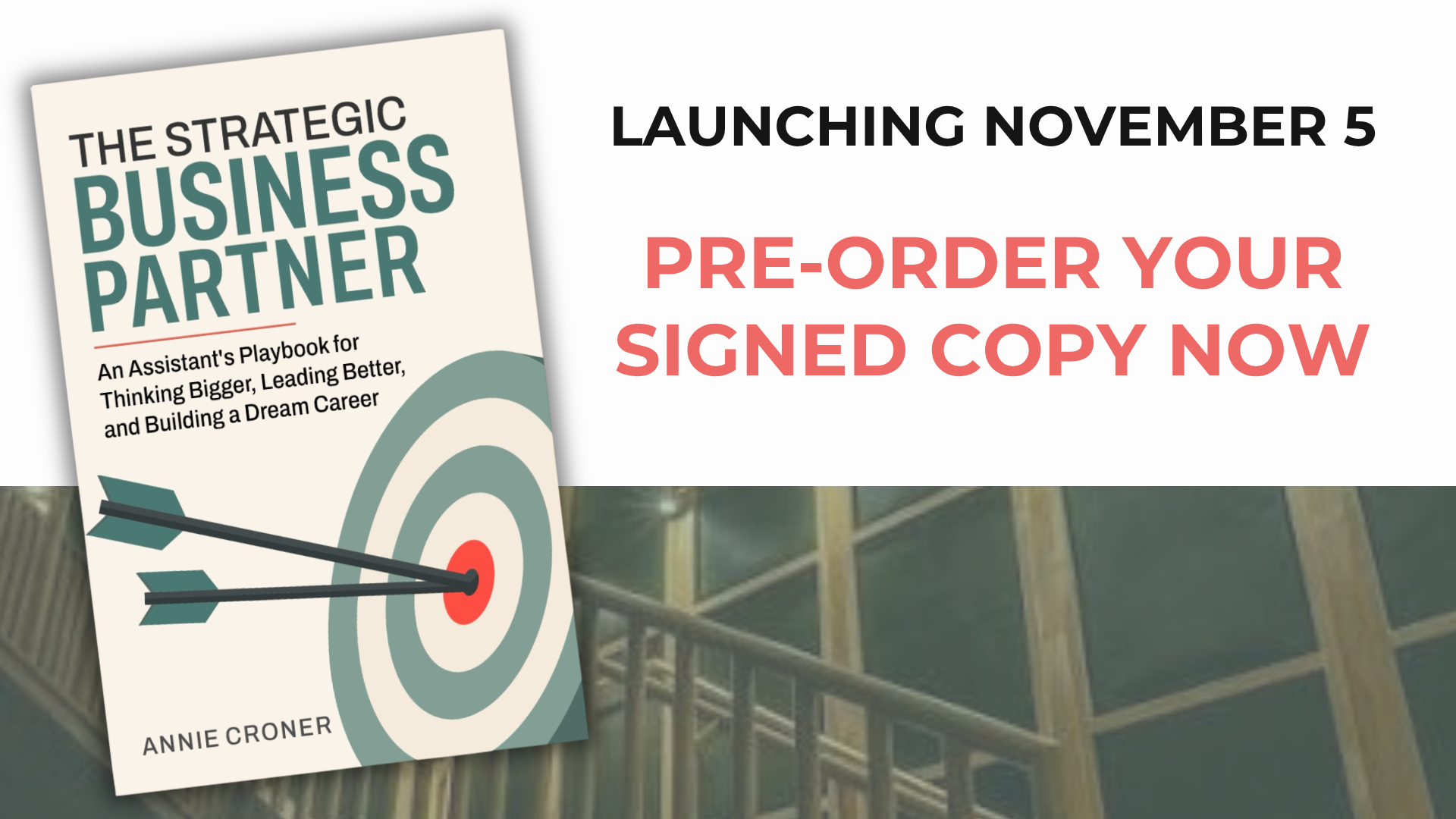
We were just talking off air about this book that I wrote, and it's going to be called The Strategic Business Partner. And I love this so much because what this does is it frees up bandwidth for people to show up more strategically in their roles. It frees up bandwidth for people to show up more strategically for themselves. It frees up bandwidth for people to, to actually conceptualize what their life can look like and a more balanced lifestyle for themselves and what their values actually are and living into those values. Which is just so amazing and rewarding and awesome. And it's fulfilling for me too, to see that technology can come alongside and support these roles in a really, really powerful way. And here are a few use cases to be able to do that. And I know in the training that you provided for Empowered Seed as well, I was listening to the recording earlier this morning that you give so many amazing use cases and examples, and you run us through a really great example.
Speaker A:
As well. And I just feel like for my, for myself and my own business, I'm sitting here going like, how can I unlock more of this for me too as a business owner and get my assistant on board with this as well so that we can, we've got our processes down and we've got automations in place, but taking it to the next level in terms of how we're thinking about AI, how we're conceptualizing using it and actually partnering with a tool that can actually help us get there faster or get there with more clarity or live a more aligned lifestyle to where we can kick butt in our roles and also experience the joy outside of work as well. Because what I'm hearing you say is that AI helps people create capacity for themselves, and that capacity can be allocated in a number of ways. And that's just really exciting as well. And as somebody who recovered from burnout many years ago and talks about burnout a lot also in these roles, because that's also a thing, I love this idea that we can actually make our lives how we want them to be without hustle by utilizing these tools to be able to do that. And it really is a matter of working smarter, not harder. And it really is a matter of aligning your priorities with your executives. And then just from there, noticing the holes and filling them incrementally, which is just I mean, that's what I loved about the role was no 2 days look the same.
Speaker A:
And like you, I worked in VC for the last 6 years of my career and also managed my executive portfolio and his own personal family office and stuff like that too. So that's what I love about the role is the variety. And I left my role in February of '23. And so we were just on the front end of all this AI stuff and this huge thing that is now in our awareness. the way it wasn't back then. And I just keep thinking, like, if I'd had these tools and I had the awareness back then, what I could have accomplished in the role. And I hear my clients talk about how they're utilizing AI as well, and like, just noticing this thirst and this hunger to be able to better leverage that to an end that feels much more aligned with them, which is just really cool.
Fiona Young:
Oh, for sure. And I agree with you completely on the point about burnout. And for sure, like, so, so many of my clients are working like 50, 60-plus hour weeks, week on week. Are, you know, the juggle is real. A lot of my clients are like, have young kids, you know, so a real juggle in life. And I think if AI can help to automate and streamline the drudgery, the stuff that no one ever liked to do anyway, like expenses, I'm looking at you. In order to give you just like time back, like that is a great thing, right? If it can help us to have better balance, I think that is a fantastic result as well. So it's definitely not all about just like hustle, hustle, right? And like trying to go faster and achieve more and more and more endlessly.
Fiona Young:
But I think as well, you know, I always talk about this like intentionality of really being, you know, intentional about what you want to outsource to AI because a lot of the folks I hear who are AI detractors are like, Oh, you know, AI, it could never take the essence of what makes us human. And it, you know, it's so inhuman and impersonal. And I just completely, you know, I completely disagree with it on principle. And it's like, I don't think the, you know, it's sort of like you don't know what you don't know. And I think a lot of those folks don't understand that actually there are severe limitations in AI, right? And the humanness that we all have is absolutely still critical. In fact, it's probably more critical than it was before. So it's really not about, again, automating away absolutely everything you do and all the, the deeply human stuff.
Speaker A:
No, no, no.
Fiona Young:
It's about like automating away the stuff that's like, frankly, a waste of our human brains.
Speaker A:
Yeah. Yeah. And I think that's something really powerful too. If you enjoy a certain part of your job, don't outsource it to AI. You always have the option not to outsource. If you love event planning and you love your method for event planning, like we're not saying that to just go in and, and outsource it all to an AI agent or whatever. I think that we're so afraid that AI is going to take away from our roles when in fact it doesn't have to and it can add so much.
Fiona Young:
Exactly.
Speaker A:
Yeah.
Fiona Young:
Yeah. I think seeing this as being a really empowering tool and that, that's all it is, right? It's another tool. And, and, you know, obviously this role has evolved beyond recognition. If you look backwards over the last 50, 75 years, actually my mom was an EA to a VC founder back in the '90s. And even comparing her role then to mine, you know, in the 2010s is, oh my gosh, like it's, it's unrecognizable, let alone today. Fast forward 15 years. We can just see though, looking backwards, I think how the role has evolved from secretaries and typist pools and switchboards and, and, and to it is, it is genuinely unrecognizable today. And I think that's really the journey that we're on is this continued evolution and So long as folks are willing to adapt.
Fiona Young:
And as you say, like my clients are the same, you know, very curious and very keen to get stuck into AI. You are well positioned to thrive in the era of AI so long as you're on this train, right? And you're learning and keeping that curiosity for AI alive, I think.
Speaker A:
Yeah, I'll be really interested to see where we are 5 or 10 years from now as well. There's so many people advocating for themselves more than they ever have before, advocating for their vision of the role, getting, grasping, understanding what that vision can look like for themselves, and then running with that, and then incrementally making shifts in their careers in order to be able to steer their career in that direction. And I think that a lot of executives are now having to get on board with this idea that people coming up through the ranks are no longer satisfied with lower-level work, or some people are. Now look, I'm not here to say that if you like going and answering phones and doing the basics of the role, that's fine. I— there's nothing wrong with that. This is not a judgment on that, but I've just noticed more and more people advocating for more and more responsibility and more and more respect and more and more influence in their positions. And that's just That just brings my heart joy because I think I'm just so growth-oriented and I love the people who are like, yes, I want to grow in this. These are the areas I want to grow in, or this is not the season for growth.
Speaker A:
This is my season for remaining steady Eddie. But I do think that there can be incremental learnings even if you are comfortable in your role and even if you don't intend on shifting out of that role, even if you want to remain in your same position now till the end of your career. That's okay. But if you can get some learnings in there to be able to improve your life, why wouldn't you do that?
Fiona Young:
Oh yeah. I've had a couple clients who have been like very honest and open about the fact that they're in their 70s and that they've been in this career for 40, 50 years, like no joke, who've come through my course. who have fought to get budget for my course from their organizations. And I find it hugely inspiring because I'm like, I want to be you. I want to be the person who's in my 70s and who still wants to learn. And I think that that is super admirable. And it's not because it's not coming from a place at all of, oh, I want to get that next title bump or whatever it may be. Not at all.
Fiona Young:
But it's just from that sort of that place of curiosity and genuine agency and And wanting to work smarter. And I agree with you. I think it's interesting looking at the evolution of the role more broadly. And it's certainly something that I think about a lot because I think AI is, is just a small piece of that, right? This is a push that has been, you know, decades in the making. And I think for sure your voice is one of the best to follow when it comes to thinking about really elevating this role and the potential within this role and growth within this role. I also think, you know, for sure, like Lynn Walder, you know, another person who's creating some game-changing frameworks to think about what does this role look like? What is the future of this role? I think the Global Skills Matrix, another one. I also, Gillian Huffnagle, I don't know if you've had her on the show.
Speaker A:
I haven't, but I want to. Yeah.
Fiona Young:
Yes, we're pals. I've, I've been doing some work with her recently and, and yeah, like her, you know, competencies, super, super, super holistic and super helpful to really to get deep into that real, what is the menu of services that we offer? What's possible in this role? And are we really holding ourselves to that standard for excellence? And Melissa Peoples as well, you know, as we think about ExecOps and the concept of ExecOps, really powerful stuff. So, I mean, there are some incredible people in this industry who I am like, I'm listening to absolutely everything that they are here to say. I should probably add Rachel Bonetti as another one.
Speaker A:
Yes.
Fiona Young:
fantastic. That's fantastic ideas and thoughts. And, you know, these are all people your listeners should follow if they aren't already. But yeah, there's so much to learn out there, right? Beyond AI. And I think sometimes it can get, I, I'm certainly deep in the bubble of AI, let's be honest. But I think sometimes, like, even for my clients, it can feel like it's all AI all the time, especially for folks working in tech companies.
Speaker A:
Right.
Fiona Young:
Where it's like AI is being shoved down your throat and it's almost like AI overwhelm. And I think that's one of the big challenges actually that I'm hearing from folks. Right now in 2026 from where I sit that's maybe different than the past few years. But it's good to raise yourself a bit above that and, and think about, okay, AI is just one tool. It is just one thing to think about. It's one piece of the mindset I need to build, you know, in order to progress in my career. And no matter what that looks like for me personally, no matter what season of life I'm in right now, But there are so many other super important things, right? And the EQ and the softer skills and the leadership and the influence and stakeholder management, like all that stuff is still ethically important in this role. AI is just one piece of the puzzle, I think.
Speaker A:
Yes, definitely. And I know for me, being a trainer in the space more broadly, it makes sense that you're like, yes, I'm all about AI because that's your business. That makes sense that you would want to stay on the cutting edge, the front edge of all of that sort of stuff so you can know what's coming down the pike so you can train our people with, with that. And for me, I'm noticing a strong desire for emotional intelligence training and boundary setting and how do I manage my mindset around certain things, which is my zone of genius.
Fiona Young:
Yes.
Speaker A:
And I've literally spent thousands of hours coaching support professionals at this point. And there's certain topics that are consistently rounded on that are specific to these roles because these roles come with very specific challenges with regards to those things as well. But I do think that AI is a definite piece of the puzzle. I think that automation is a definite piece of the puzzle. I think that remaining informed and having conversations and joining a course like yours is a great way to maintain your knowledge and to, to really make sure that you remain informed with what's out there because it's ever evolving.
Fiona Young:
Yeah.
Speaker A:
Would you just share how people can find you? Now I'm gonna link to all of this in the show notes. So if you're listening and you're like, well, I wanna write it down and you're driving or whatever, I'm gonna link to all this in the show notes. But can you just share how they can find you, where they can connect with you, and a bit about your program so that they know like when the next cohort is starting or that sort of thing?
Fiona Young:
Yeah, absolutely. Um, so first off, I mean, the best place to connect is probably LinkedIn if you're live there. And if you search Fiona Young, I'm usually the first who comes up, sometimes the second. And I also publish a newsletter, woefully infrequently at the moment, but I aim to get one or two out per month, which every newsletter is called the Carve Edge. You can sign up on my website, which is joincarve.com. And every edition is a piece of learning content, right? My background is in learning design and learning content. And so I don't send newsletters willy-nilly. Promotional stuff or updates or anything like that.
Fiona Young:
These are all— each one is a nugget of learning for you. And all the past editions are actually on the website under the resources area as well. So there is a wealth of knowledge and guidance and so forth on AI there, including loads of cool stories from clients of mine, loads of cool case studies. So, so definitely lots to sink your teeth into there. And then in terms of my course, so I run my course quarterly and so we have a cohort That is launching, I believe it is October 6th, 7th. And these run for 7 weeks. So they run on Tuesdays, typically at 9 AM Pacific, 12 noon Eastern, 5 PM UK. We tend to have pretty international group.
Fiona Young:
It's usually half UK, half US-based folks. And, and that really is quite a comprehensive experience that walks you through, you know, everything from what is AI and AI risk to prompting, to all of the advanced feature set within your AI chatbots, your large language models, whether you're using Claude or Cowork, whether you're using Copilot, Gemini, ChatGPT, all of the above. It's tool agnostic all the way through to talking about automation and agents and how to build the builder mindset that I'm seeing EAs are taking on board more and more with vibe coding and, and more. And I'll round it out with a bit on how to become an AI change agent. So it's really, it is designed to be quite a holistic experience and very much choose your own adventure in terms of what happens outside of our course sessions. So lots of great workouts, weekly practices to help you really bring on board what you learn in the sessions, and, and also capstone project to really put in place tools, systems to again practice what you've learned. So it's, it's very much hands-on. And yeah, would love to, absolutely love to share more with anyone who's interested.
Fiona Young:
If you're listening to this and you're like, ah, I, I'm interested but I have a few questions, do feel free to reach out. Always happy to chat.
Speaker A:
Yes. And if you are listening to this as it comes out in September, there's going to be a lesson by Fiona in the Empowered Seat membership as well. So if you just want a taste and just to see, you know, what is— what this is all about. And then I'm gonna tell you right now, if you take that lesson, you're definitely going to sign up for her course. I was listening to it earlier this morning and it was just so powerful and so good in the use cases. And like the examples you walk us through were so great and so clear and you're just gonna want more. So if you wanna dip your toe in, you can do that inside EmpowerC in September. Regardless, I do hope that you'll follow Fiona on LinkedIn.
Speaker A:
I love her content. I love her ethos and all that she's about. So please follow her there. And thank you so much for coming on today, Fiona. I really, really appreciate it. Thank you.
Fiona Young:
Thank you, Annie. Thank you for sharing your platform with me. It's always fun chatting. Thanks so much.
Speaker A:
Okay. Bye-bye for now.