Annie [00:00:01]:
Welcome to the Whole Assistant Podcast where assistants come to embrace their badassery and discover how to show up more strategically for their careers, their executives, and most importantly, themselves. I'm your coach, Annie Croner. Join us as we dive into the skills, strategies and mindset that will help you unleash your full potential. Let's go. I just have nothing bad to say about Lynn. I'm going to let you introduce yourself Lynn, and then we're going to get started on this conversation. We're going to be talking today about standing standalone business structures for business administration and the future of work. And we were talking prior to hitting the record button.
Annie [00:00:38]:
So many amazing things that we could potentially touch on. I'm very excited for this conversation. But before we get started, Lynn, will you please introduce yourself?
Lynn Walder [00:00:45]:
First, I just want to say thanks so much for hosting me on this podcast. I I love being with my kindred spirits out there, particularly those who are bringing amplified voice to this person profession. My name is Lynn Walder. I usually want to link myself into one niche place that I'm working, but I usually live the portfolio life, at least for the past five to six years that I've been working. So right now I do consulting through my business executive management partners and that is partnering on a varied spectrum of executive operations, administration, project management, scale up startup environment. Support with founder CEOs is my main niche. But I also work a full time job at a place called Lab Central and they're like the we work for labs and startups, spin out for biotech companies and I work closely with the scientific tech founders and I like to joke that I help teach them how to do all the adulting in their business, which we all know is many of the times we focus on when we're administrators trying to help them streamline. They're very excited about science and all the technical details.
Lynn Walder [00:01:52]:
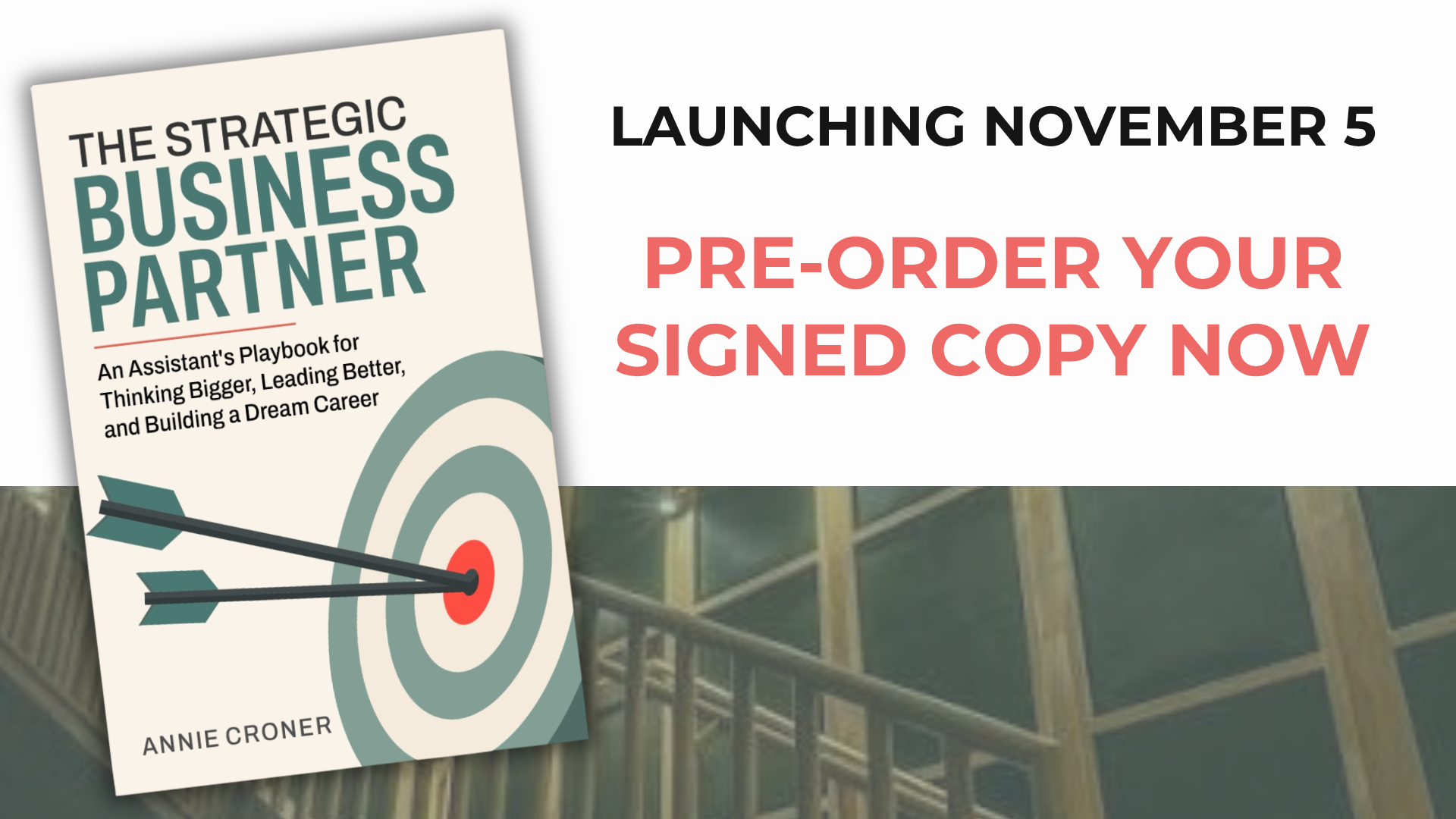
But building a business outside of an academic environment is quite different when you have your investors to answer to. So there's a lot of process, framework, accountability systems and so I help teach that across a wide spectrum of topics. And then I'm wife, mother, advocate, speaker, trainer, sometimes coach, even though I don't like that term. I consider myself more of a consultant because I have I am not technically certified in coaching speak as they say. And yeah, and I also do some other stuff on the side that is my creative spiritual outlet and I do some writing. I'll be having a book come out but I don't want to talk about that yet. It'll probably be later in the year. And yeah, so I'm living the portfolio life outside of the outskirts of Boston, Massachusetts.
Lynn Walder [00:02:33]:
So grateful for you to have me today. And I look forward to the conversation that we're going to have.
Annie [00:02:37]:
Yeah, this has been much anticipated. We've had several reschedules. I'm glad we're finally having this conversation. So to give the listener some context, you had sent me a presentation a while back. You sent it out to a number of us advocates in the space and people who you thought may benefit from this presentation. And it's all about creating a standalone business model for business administrators and business administration. And I poured over your material so many times I can't even say I've highlighted, I've marked it, I've done all the things I'm very excited about.
Lynn Walder [00:03:14]:
Kudos to you because it was like 60 pages long. This is not like your typical presentation. This is, this was a step by step, very detailed. I need to get it all out of my brain onto a piece of paper. Vibes. Wow. Kudos to you if you've been poring over it multiple times.
Annie [00:03:30]:
Yeah, it's just. And what I love is that it is really thorough. You actually offer up a three step model to, to actually enact this centralized business structure for administration, standalone business structure. Can you explain what that can look like, like what model is and then what a more evolved business model is for business administration? Can you explain the difference?
Lynn Walder [00:03:56]:
So I want to also get some terminology aligned here because I use some terminology a little bit differently than probably the average administrator or business currently uses it. And I go back to history in order to try to realign and what I would say, reclaim the term of business administration. I myself graduated from Northeastern University with a Bachelor of Science of Business Administration. And so interestingly enough, operations is a subsect of the curriculum under business administration. Yet somehow over the years there's been this flip that's happened where operations has been placed above business administration as being the more respectable kind of platform of skill set. And administration has been put to the side as a side gig of the business and a nice to have rather than the actual overarching umbrella which houses all of these administrative verticals within the business. And so while I call I, I call my model that we're talking about today, the Executive Operations Cohort model, in truth, the goal of this model is to help get us to a true standalone business administration function that is treated just like every other function in the business with a real career ladder, with real okrs, with real resourcing with a real strategy seat at the head table in order to support the bottom line ROI of a business. So that's why I use the term business administration in lieu or synonymous with what most people look at as operations right now.
Lynn Walder [00:05:43]:
But I believe that we should get back to the term business administration. So that's. I just want to clear that part up. Traditionally there's been a historical trajectory of administration where it was looked at as a person. It's similar to HR many years ago that a person would come in and they would press a couple buttons in order to do payroll and do all like these very tactical kinds of things. And you could just drag somebody off the street to come in and push a couple buttons and take care of it. And if you couldn't do, we'd kick you out and we'll just swap you out for somebody else because it's only pressing a couple buttons. Interesting enough, over the years that has continued to morph and grow and evolve and we've gotten to this place where we are this cross section of not just tactical doers.
Lynn Walder [00:06:29]:
I call and I use the term strategical in many of my conversations with particularly leaders. And when I say that term they actually laugh. We have been called to be a bridge between understanding strategy and then translating that strategy or vision into tactical outputs. This is a very unique role in place to be within an organization. I've been an administrator for almost 15 to 20 years and I was out out in the wild. And I kept hearing how administrators were so frustrated that they were on a title cliff. They had no place to be promoted to. They weren't getting the respect, they weren't getting the compensation, they weren't feeling challenged.
Lynn Walder [00:07:11]:
They were very siloed. And that's where I'm going to bring it back to what your question was. What is the traditional model that we have been forced to work in versus what I am proposing within my executive operations cohort, business administration standalone function. And the traditional models have kept us in these side gig nice to haves siloed within different verticals with value attached directly to your executive rather than to the business. So if you usually go into most organizations you have an executive assistant who is first hired usually to support a CEO. And then you will hire an executive assistant to support the CMO or the chief legal officer or the Chro or any of these C suite individuals. What other organization or what other vertical of the business if an executive gets either moved out of the company, retires or decides to go and do something else that somebody comes to that executive or the person that's right below that person supporting and goes what are you going to do now? But that's what happens to us because our value is only tied to executives, not to the business. And so I saw that as one of the main crux of our problems is it's not that administrators don't have the talent, the wherewithal or the evolutionary adaptability in order to plug into truly bringing measurable value to an organization.
Lynn Walder [00:08:39]:
It's that the systems have been structured as so to keep us from that. So a lot of what I do is I'm trying to create a pathway that goes from low risk to I would say semi high risk change management into back to low risk management to get us from that outdated, very limiting, very siloed and very short term structure of which we have been forced to work in over to a much more futuristic, which I say futuristic but it's technically already happening now, systems change management opportunity that posits us as a standalone function which has our value tied to the business rather than just to executives. And so that's where I say I want to go from siloed individualized executive driven value role and career to integrated standalone business function with bottom line ROI responsibilities and accountability that's driving real value for the business. And that's what my model tries to deliver on.
Annie [00:09:46]:
Oh, I love this. Yeah, I just can't get enough of this. Okay, so what needs to change in terms of business structure and leadership mindset in order to move the old model to a newer model?
Lynn Walder [00:09:59]:
First of all, there's a lot of work that needs to be done. I've been doing this work. My first framework, the Administration Cohort, which now has been retitled as the Executive Operations Cohort. I launched originally in 2016 and then it was taken on by one of my very dear friends, her name is Kim Cotton, who went and implemented it at her place of work, which was a 5000 person organization which I have to be honest with you, I didn't think it could be implemented at such a large organization. So she proved me wrong and, and she really leveled it up to what I would consider it to being today. And then I also launched in 2018 the admin title Recalibration Initiative. And that really got a lot of heads turned because I was building a career ladder that was beyond just the titles which have been bestowed upon us which are Administrative Assistant, Executive Assistant, Senior Executive Assistant and then they've tacked on Chief of Staff. Now I want to be very clear, I do not agree or believe in the titles of executive Assistant or Chief of Staff.
Lynn Walder [00:11:08]:
And I have very specific, not only reasoning behind that but also experience as to why that is. And, and I think that's one of the main reasons why I wanted to put forth a traditional admin title recalibration framework which takes and puts us into just like every other function. You come into it and you come in as a coordinator and you move up to an associate and then you move up to a manager and then you move up to a senior manager and then an associate director and you can work your way all the way in my eyes up to being a coo. That's what I think that we should be doing as a strategic development career path similar to what HR had done many years ago when they started SHRM back in the 1940s. And so we're about, I would say 30 to 40 years behind what HR has done in their realm being originally these very tactical, benefits driven, payroll driven roles turning into people strategy. And so we're on that cusp right now. So I think the way that we have to approach it is you can't approach it, you can't eat the elephant. Systems change takes a lot of time, it takes a lot of grit and tenacity and it takes a lot of education.
Lynn Walder [00:12:25]:
And I also think it takes what I call doing a lot of pilots where individuals and this is very much getting down to how humans function in their own right. Humans do not understand and will very rarely move towards behavioral change until they feel something themselves or they bear witness to it and they experience the benefits of it themselves. And so just going in and proposing something, you could talk until you're blue in the face if it's going to put any extra work on anybody else in the company, they have their own fires to be putting out. They don't care, they're not going to help you. And so the unfortunate reality is a lot of the work that has to happen within our realm when you're doing education, upgrading and showcasing what actually could be you have to do. I mean that's really what it comes down to. You have to put forth but in low risk, short term chunks so that you can get the data and the feelings in a not scary way. And so this is what the model is that I try to put forth is it's a change management model that I would say is about a seven to eight year time frame if you really and you don't have to go the full way.
Lynn Walder [00:13:34]:
That's why it's very versatile and so it merges my admin title recalibration initiative and the executive Operations cohort model and into one. And it showcases in three distinct step stages, how to go from a very low risk buy in pilot structure of a community of practice, which nobody's going to tell you to not do because it's not encroaching on anybody's work or place or changing structures yet. It's more about building camaraderie and collaboration and a stronger voice and building your own confidence as an administrative team to work together to start advocating on your behalf and showcasing some of that value. And then stage two is really where it starts. And there's a 2.1 and a 2.2, because this is the longest of the kind of the change management model where you have to start putting more, I would say, accountability behind what you're delivering on. And so it takes more commitment and much more formalization at that stage too, which is what I would call building a center of excellence. This is what I believe that Kim Cotton really brought to the model here because she was building it out in a very formalized way of what you need to be delivering on and how it's structured at this juncture of the stage two. Stage three.
Lynn Walder [00:14:52]:
I will say we have not gotten to stage three yet. I believe we will end up moving to this place once we have more people that have been able to move into a center of excellence and that can showcase what this standalone function can deliver on. But it doesn't get to standalone function until stage three because you have to prove and change the systems to formalize to support that career ladder, the systems and the deliverables and in the very clear development pathing for stage two and. But once you get that in place and you have the right competencies at the right levels, where you're really pipelining up and the business starts recognizing, oh, whoa, this is like a real dynamic new way of integrating administrators. It's less of a jump to come back and say, I think we need to start setting this up as its own vertical with its own C suite head at the top. That helps drive the strategy for this and how we integrate into the rest of the business in order to deliver on very specific output for the business as well. So that's what I'm seeing. How do you get from one side to the other? I recognize now, and I say this in the intro to my model.
Lynn Walder [00:16:07]:
There is there it was too far apart. It was like I was asking people to go from stage one to stage three. And when I spoke to some HR leaders. They were very generous. I used to work in hr, so I know a lot of the kind of people who are now heads of HR in the biotech industry. And they said, I see what you're getting towards and I like what you got, but you can't go from one to three. It's too far of a jump. You need to somehow build a bridge in there that brings not only the administrators along because a lot of the administrators have been hired in under these outdated, stigmatized, very limited and narrow scoped roles and titles.
Annie [00:16:44]:
Yeah.
Lynn Walder [00:16:45]:
You're asking them to just jump into this new strategical competency and mindset with nothing to bridge in between. I said, okay, I see what you're saying. And then that's what brought everything together in this one model that I put out in this document, man.
Annie [00:17:01]:
Yeah. And I as a coach who like I obviously I'm very heavy in a mindset and the model of coaching that I am brought up under is very much based in cognitive behavioral psychology. I'm by no means a therapist or anything like that, but that's the model I work from. And it's really fascinating to watch different mindsets in the industry and working with these really high level thinkers who are supporting CEOs and working in the C suite and just want a lot of change. They want to see more respect for themselves, they want upward mobility, they want to create the path for themselves and they're at a loss because when you're supporting a C suite executive, historically speaking, like that's the highest you can go. There is no way to go higher.
Lynn Walder [00:17:40]:
Yeah.
Annie [00:17:41]:
And what I love about what you're saying is that it actually gives people a path forward. And I think too that like the challenges that I see are more the people who are stuck in the old paradigm and who are very, very, this is my work and I'm not going to let anybody in and this is my executive and I'm not going to build a bridge. And this is my person and no, this is my mind as opposed to like that cross functional piece that is going to be so important in this new model and this is so important in the current model. Even like getting out of our silos and making sure that we are understanding the overall rhythms of business, understanding what is important and what is imperative and then almost in some situations pointing out blind spots to our leader so that we can like bridge that gap between different departments and whatnot. That is the biggest challenge. Like there's so many challenges, not to mention like leadership Mindset and the, you know, wanting this person to be just theirs and wanting to like, it's territorial and speaking psychology.
Lynn Walder [00:18:53]:
I'm speaking of psychology. Right. There's. I want to also make it known that there's a narrative out there. Everybody has to evolve. Everybody has to move on. Everybody has to get bigger, better, more. And I'm.
Lynn Walder [00:19:04]:
That's actually not what I posit with my model either. I think it's okay to be content with where you are. And I think the issue is this, is that those who have been doing this sometimes for many years, they see how fast things are moving and they see what the expectations could and should be within this role as it starts moving faster and faster. And that could be really overwhelming and really scary. Your natural proclivity is fight or flight and to hold on to what you have for dear life. And because that's safety, that's comfort. That's what I know. Right?
Annie [00:19:38]:
Yeah.
Lynn Walder [00:19:38]:
And truth. Some people are. They want to just be where they're at because they're happy where they're at. And I think contentment is underrated. I got to be honest with you. You love what you do and you're like, cool. No need to. I don't need another.
Lynn Walder [00:19:48]:
Or that's awesome. But I think that that can plug into this model too. And not only that, I think it's really important that these individuals reach their arms backwards to pull up the new juniors that are coming up. They could learn so much, even the mentoring side of it. So I do think that there's some people that are putting up walls. And my model says, work with the willing and you can create micro cultures. And sometimes you have a queen bee or a king bee that's up at the top that wants nothing to do with this kind of model. And sometimes you just have to create your own little sub nest to start showcasing what you could be doing as administrators.
Lynn Walder [00:20:27]:
Because when leaders start feeling that you don't need the king bee or the queen bee, in order to deliver on that feeling and that sense of getting your own integrity and your own respective, you're looking to uplevel for your. You and your team. And I agree. I think that that is sometimes an obstacle here, but I also believe that we can have both. And. And it's about how do you integrate those individuals and come to where they're at and utilize their skills and champion what they do have? Because if you alienate those individuals, you're actually losing a lot of really good historical knowledge for what they can bring. Yeah. So I think it's about a balance between both.
Annie [00:21:09]:
I think it's too creating safety for those who may be territorial because there's some sort of underlying fear and so we can create a safety for them and have open, honest conversations. Hey there, quick pause. Do you want to grow in your career but don't have a ton of extra time, money, or let's be honest, energy to commit to leveling up? If this is you, I have got you. Empower Seat is my intentionally affordable membership for busy executive assistants and support professionals who are who are done white knuckling their careers in isolation. Inside Empowered Seat, you get support that's actually built around you. You're gonna get access to me inside of our VIP online community. You're gonna get two monthly calls with me as well, a monthly training session you can watch or listen to on the go. It's pre recorded so you can either listen through our private podcast or in the vaults.
Annie [00:22:05]:
It's affordable, practical, sustainable growth built by someone who gets it. If this sounds like what you've been looking for, you can learn more and join empowered seat@wholeassistant.com empowered seat or just click the link in the show notes below. Now back to the episode.
Lynn Walder [00:22:24]:
Another thing that, that I started recognizing fairly early on is that administrators, they, they don't always know how to speak in the language of the business. They only know how to speak in the language of their executive. And when push comes to shove, the business doesn't care about that. But we keep using that language. And so a lot of the models that I have built and the language that I have placed specifically in this model is really tying into business what the business cares about most. We live in a capitalist society. You can't get away from it. A business's job is to survive.
Lynn Walder [00:23:04]:
And I find a lot of administrators, when they're trying to put forth something that is in support of their role or their value of how they affect the business, they usually can't get beyond only how they're affecting their executive. So a lot of the conversations I have with administrators is you need to start thinking that there's only four things that businesses care about and anything you put forth, whether it's to your executive, to your hr, to any of the other leaders in the team, especially if you're trying to move your, your own profession forward. Does it make the company money? Does it save the company money? Does it move the leaders and or company closer to its milestone goals in a stress free, frictionless way which technically feeds into 1 and 2 or 4. Does it increase the brand of the organization? Which again feeds into one or two. I sometimes tag on the will it get in? Recruit top talent for your organization? But again, that's only if it's for one or two. When you start understanding that this is the only four items that a business cares about at its bottom most fundamental level, and you start building everything around that, it's amazing what you can get done because you cut out all of the garbage, you cut out all of the ego, you cut out all of the emotion. You start working with data, you start working with language of the business that other people understand and you take yourself out of it and you get so much more done that way. And so a lot of my model has been built in that replication as well of speaking to a business mind rather than an admin mind.
Lynn Walder [00:24:51]:
Yeah.
Annie [00:24:51]:
And I think so much of our jobs historically have been relational. So we are relying on all these relationships with our executives and they should give us more money or they should do X, Y or Z for us. Because I have this relationship with them and I've had client after client come to me. Several clients at this point have been doing this for five years now, burned because they've given up so much to support their executive. And in the end, the business always acts in its own best interest 100% of the time. That is true. So I think that we also need to recalibrate to that too and realize that this is a business. We are supporting that.
Annie [00:25:30]:
While you may have friends in the business, ultimately the business is going to act in their best interest. So you also need to take steps to act in your own best interest. It is transactional in that regard. Not to say that we don't want relationships, not to say that we aren't prioritizing those or even that cross functionality in terms of affecting the company culture. Because I'm a huge believer that business administration is the keeper of the company culture, probably because of this cross functional piece.
Lynn Walder [00:26:02]:
So I'm going to expand on what you just said. I'm going to expand on what you just said. This is one of the untapped most important value adds of administration as a business function. If it's integrated appropriately and it's actually looked at of the untapped talent that is in there and the deliverables of how we're already linked into all parts of the business. The way that I put it forth is this. When you have a C suite, the C suite is technically accountable to the board. Right? The C suite is technically accountable to the CEO and the CEO is to the board, but. And then the rest of the organization is responsible to the C suite members or the goals of that.
Lynn Walder [00:26:46]:
There's not technically anything in the middle from a T perspective to keep the leadership team accountable to each other and to the actual goals that are at that strategy level. Not only that, anytime that there's an employee survey that goes out again, I work in HR for a number of years and so we would have to put out the employee engagement surveys every year. What do you think are the top two or three things that come back all the time as the most painful points? That is really hard to fix actually. But I really believe that if we recalibrated how administration is integrated into the business and deployed the business that we probably could solve for at least 80% of what comes back. So what do you think? The top two to three things are.
Annie [00:27:26]:
Usually being siloed and not actually connecting with others in other departments. And there is no cross functionality.
Lynn Walder [00:27:33]:
That's definitely one of them. So I would say collaboration is one of the things that comes in. I don't know what's going on. I'm always behind. I'm always misaligned with what's going on. So that's 1, 2. Do you have any other ideas?
Annie [00:27:48]:
No.
Lynn Walder [00:27:50]:
Transparency and communication. I don't know what's going on. I don't know how decisions are made. I don't know what the leaders are doing up at the top. I get information too late, so then I'm behind the ball. Like all this kind of stuff. The underlying crux of all this is trust. But cross collaboration, communication, transparency and decision making frameworks are all linked in also into say really solid goal setting process up at the top of the organization.
Lynn Walder [00:28:17]:
If you have administrators that are trained in this strategical bridge of toggling from strategy and vision into execution of process frameworks and communications around delivery of those items, you plug the gap because you are placed all throughout the organization. And so the goal, if you have a really well integrated administrative function, you have information flowing down and back, up and down and back up. Just like when you have your heart pumping blood throughout your body. What happens when blood stops going to one of your extremities? It dies. Yeah, that's what happens if you don't utilize administration the way that it could be utilized. And this model I truly believe is the way to do it. And it's really about getting the administrators, I think mostly are on board with this model because when they start understanding and then seeing it in action, it's exciting. And when you feel how it works, it's even more exciting.
Lynn Walder [00:29:20]:
We're running up against the walls right now of systems lag and that's a much harder titanic ship to turn. But it's happening already whether people understand that it is or not, because the speed and complexity and the hybridization and the dynamic integration of, of not only skills but the speed of outcomes and the increased risk that's happening across the landscape of business, it's going to require a dynamic plug in of new, I would say deployable and plug and play skills and talents that administrators have been already playing for a very long time. It just, we haven't been able to communicate it, we haven't had the structures to elevate it and be more visible and we haven't had the language in order to go and advocate for ourselves. That started to change. And you see this also with the Chief of staff title that's coming onto the scene. And I mentioned earlier, I don't agree, my, my original title recalibration model was specifically put together and launched because in one day I talked to two different individuals who both had the title of Chief of staff, but one was a 25 year old startup office manager who was just promoted at a small tech startup company. And in the afternoon I was talking to a VP level chief of staff who was the right hand person at a global international organization who had worked at places like JP Morgan and Goldman Sachs prior to this job. And I was like this is a problem, this is our problem.
Lynn Walder [00:30:58]:
Nobody knows what we do and they're throwing out titles like candy. And so you never can truly set up a development path that holds people accountable and holds the business accountable to backtracking in. How do we learn those skills to get up to the strategic level, but more importantly, how do we get compensated for it and held accountable for it. And so this is why I said no other vertical has this nebulous title that nobody knows. And it's so broadly skewed. Yes, it can shift from startup to scale up to global, I get that. But within those stages, usually the deliverables are somewhere in the same, the same kind of realm of each other. And so this is why I really believe we need to move over into the traditional titles of Coordinator of Executive Administration and then you can move up to associate, which would be like, or specialist or whatever you want to call it.
Lynn Walder [00:31:56]:
And then you get into manager and you, you don't need to manage people in order to be a manager. You could be managing Projects, you could be managing stuff, you could be an individual contributor and still do this. They do this across other different functions of a company. One of the pushbacks I was getting originally with my model is that they were like we use Ian Radford for our, our benchmarking. And I was like, ah, okay, I know how that works. And so I, I went in and I said this is how it plugs in place because you guys are working throughout from outdated, very old school models that literally says that this is a narrow scope of. We are just data entry, clerical. That's what you're working from.
Lynn Walder [00:32:31]:
And really what we've moved into is project manager status when you really start looking at the skills and the competencies. So these are kinds of the things that I'm constantly grappling with and battling with. And the Chief of Staff title is already starting to implode on itself a little bit. I want to acknowledge that it's a. I'm. While I don't agree with the title of Chief of Staff as the next level up from Executive Assistant or Senior Executive Assistant, I think that many of the training mechanisms that are out there right now are actually quite good for the upskilling nature of what we need to be doing in order to start moving into that more tactical strategic realm. Because there's nothing out there right now that is is businesses sure as heck aren't going to put anything together to level us up. Right.
Lynn Walder [00:33:16]:
So I want to say kudos to those organizations that are doing that. Do I wish that they weren't tying it to the title Chief of Staff? Yes. But I'm also, I understand that sometimes you have to de optimize systems short term in order to optimize the larger broad system that systems thinking and design. Right. I think that we all have our part to play and I don't hold on too tightly to anything that's out there right now because everything's going to evolve and change and the business landscape is going to force mechanism this organic unfolding whether people like it or not. And I just hope that my model will be there for when they start looking back and going, oh boy, we don't know what to do with this now. How are we going to basically take care of this? Because we need a lot more talent deployment in a more plug and play kind of way. And, and I hope they stumble upon the model that I put out there five, six, seven years ago and they say okay, oh, okay, this looks like it might work.
Lynn Walder [00:34:04]:
Let's try to do something here. And that's really all I can hope for.
Annie [00:34:08]:
Yeah. Yes. And I think you touched on something that I have just seen totally as a trend, and that is that most people have no clue how we spend our time every day. Most people have no idea because we just. We're terrible at communicating. We're terrible at communicating what got accomplished. We are awful at communicating our. Our own ROI and our own value proposition.
Annie [00:34:31]:
And it infuriates me. And I see it time and again and I'm like, okay, guys, you're not just sitting at your desk doing nothing all day that is not linked to the overall business.
Lynn Walder [00:34:43]:
Can I share a story about that?
Annie [00:34:44]:
Yes, please, please.
Lynn Walder [00:34:47]:
Agreed. And I will say our job is unique in a sense. It's very hard to sometimes justify that roi because our days are filled with minutia. And most other organizational roles within a company are start and stop. Most of the time, there's either project or a deliverable or a KPI. I needed an extra headcount at one of my companies that I was working at a number of years ago, and I was burning out legit. I was like, I am drowning. I was working like six, seven days a week.
Lynn Walder [00:35:20]:
I was delivering at a really high level. And I know I needed help. And so I went and I said, I need help. And they were like, no, we got a budget crunch. Can't help you, so, you know, you gotta show us why you need help. And I'm like, I'm working. So you see that. But they couldn't understand what I was actually doing with my time.
Lynn Walder [00:35:40]:
So I said, you know what? My best work has always been, like, created when I'm ticked off at something. And so I was like, at this moment, and I said, you know what? I'm gonna show you how much work I'm doing. And I did the most petty thing, but it worked out so well. And I continued to do it actually every year after. And I share this with administrators. I created literally a task tracker where I tracked manually each day for six was six days straight for two weeks in two minute increments. Two minute increments. I was tracking what I was doing every day, including how many emails were coming in that I was triaging, how many emails I was sending out and.
Lynn Walder [00:36:21]:
And who was requesting what work, when. And so I just tracked it for literally in two minute increments every single day. It was painful. I hated it. It was the most, like, annoying thing to do. But what happened was miraculous. After I got through this, when I got to the other side of it, I was able to take that information and I translated it basically into some like actual visual charts and I was able to look at my time and say, oh, these are the chunks of where it's being spread spent. I am working six to seven days a week, this many hours and this is the volume of what I'm doing.
Lynn Walder [00:36:59]:
I need help. And I was able to get not 2.5 headcount but I was able to get 1.5 headcount at that point. Data matters and we need to start using the language of data. This tracker I have, I can share it with you if you need it on a link for something because it's just again an open source template that I give to whoever needs it. But this is what's important. We need to use data and just coming to the table and being like I need help or I need more or it doesn't work. And that's why the minutia, it's very hard to measure what we do. But to do that you need to track and you need to show what you're actually using your time on.
Lynn Walder [00:37:37]:
And then it's a lot easier to tell that story back and link it back to the, the value to the business. So I think that it's not just about mindset shift, it's actually about advocating and having a narrative around your output. And you mentioned it a little bit before, unfortunately. Another I think thing that needs to start being broken down in our industry is that time of service does not equal competency of service or value provided output to the business service. And it's a hard thing to hear sometimes there is experience that comes through that time. But if you've been working and owning the same skill set for 20 years with the same person that you've been working with, capitalism doesn't care about that, especially now with AI on the scene. So it's going to be a harsh wake up call. And so I do think that there's, this is the opportunity that you're talking about that is going to be very painful for some people and maybe a little bit more of a pathway for others.
Annie [00:38:39]:
Yeah, and I think even we talk about like systems and that sort of thing. This is like a little off topic, but I'm just going to say it anyway because it may help people act, actually capture their value proposition. Like you actually need some sort of digital centralized task tracking system. And the reason I say that is because you need to be able to access it from anywhere so that you can add things to your list. And as much as I hate to say it like, you also need to become aware of all that you do so that you can articulate all that you do. Many of us are frustrated because we want raises and we get to the end of our year for annual review and we don't leverage that meeting because we've not actually captured all that we need to capture over the year of our value and all the value we've added to the company. Like, this is the piece that really gets under my skin.
Lynn Walder [00:39:27]:
I would say it's. You don't even have to track it. Like every single day for the entire year, people say, oh, I want to track this. I know this is just an audit. Just do it twice a year. Even if you do it only once a year, just make sure you do it during one of the busier times where you know you're going to be pulled in a lot of directions so that you're getting the most amount of data input that you can so that you can drive those visuals and that data output to, to tell your story in a. In an honest fashion. And so it's really, it's an audit.
Lynn Walder [00:39:53]:
And that's what I did. I. I did it once or twice a year for two weeks so that I had enough data coming in and then I used it one for my own input. And let me tell you something, it also builds confidence. And you're like, dang, I do a lot of work. Wow. I am doing a lot of important stuff here. And you're.
Lynn Walder [00:40:08]:
You can speak to it back and say, oh, no, it's right here. It's right here.
Annie [00:40:11]:
Yeah.
Lynn Walder [00:40:11]:
Most of us were so overwhelmed and burnt when people say, what did you do? And you try to think back really hard and you're like, I can barely remember what I did this weekend, let alone like, what all the millions of things that I'd been multitasking on in my head and on my computer for the past 24 to 48 hours.
Annie [00:40:26]:
Yeah. What I meant by task tracking is like actually coming up with a system by which you manage all that you have going on, not every two minutes going in and writing it down. Because that. I have never done that. Lynn, kudos to you. That is amazing. No, we just want to be capturing everything. That's that, that's because we want to capture all that we do so that we can actually have meaningful dialogue.
Annie [00:40:46]:
We need data to refer to, and that's the only way you're going to get the data. And I think those of us who have been enrolls for especially more than one or Two years we're on autopilot and we're not showing up in a really mindful way and we're not capturing those data points so we can have those discussions for advocating for ourselves, advocating for more help, whatever it is that you, you want to advocate for. And I'm a big fan of that.
Lynn Walder [00:41:08]:
So agree. Data is everything. I love it.
Annie [00:41:12]:
Thank you so much Lynn for coming on today. I feel like we could talk for another hour or two. So much we didn't touch on today, but perhaps I'll have you back and we can touch on those other things.
Lynn Walder [00:41:21]:
Then I could talk about this all day. I'm very passionate. I believe that the future is bright for this profession. I don't care what they say about AI wiping out this industry. It's absolutely not true. We have always been the forefront of people coming in and actually introducing all of the new tech. So I can assure you AI will be synonymous with administrators in the years ahead because we're going to be the only ones basically owning and driving and implementing it as workflow specialists. So just want to put that out there.
Lynn Walder [00:41:49]:
And then the other thing is that businesses with the speed and everything of which they need to be delivering on in this more high risk, globalized hybrid environment and ASIC environment, they're going to have to start looking at administration in a different way and they'll start realizing and recognizing when stuff starts falling apart. If especially they try to offload it, they'll bring them back in. It'll just be in an evolved, different kind of structured way. And I'm hoping that they will stumble upon my structure, which would be awesome.
Annie [00:42:15]:
Yes. Yes. Okay. So I will have. If you wouldn't mind sending me that tracker, I will go ahead and include it a link to it in the show notes below. Can you tell people where to connect with you?
Lynn Walder [00:42:26]:
Sure, yeah. Most people connect with me on LinkedIn. So if you see this, just go on Lynn Walder, you can come find me there. I have a lot of things that I list through there in the the shortcut section of the front page of my profile. So you can access all of the editable documentation for this particular model and the admin title redecalibration initiative. There's some other work there that I do on culture as well. So you can download that and then I'll share the task tracker template with you and I'm assuming that you'll also post the presentation of the success 60 page step stage doc for the Executive Operations Cohort change management model and we'll call it Bidet. Onward and upward.
Lynn Walder [00:43:02]:
That's why I look at it.
Annie [00:43:03]:
Yes, ma'.
Lynn Walder [00:43:03]:
Am.
Annie [00:43:03]:
Okay guys, enjoy the rest of your week. Lynn, thank you so much for coming on today. That's all for now. If today's episode gave you language clarity or just a quiet oh, it's not just me. I am so thrilled you're here. If this podcast has been helpful for you, the easiest way you can see support the show is by taking 30 seconds to rate and review it on Apple Podcast or Spotify. This helps more assistants find this work and if you're ready for ongoing support, guidance, community and growth that actually fits into your life, Empowered Seat is where we continue this work together. It's affordable, flexible and designed for assistants who are done white knuckling their careers in isolation.
Annie [00:43:44]:
You can learn more and join@wholeassistant.com empowerment powered seat or click the link in the show notes below. And until next time, go embrace your badassery.